As the creator of Canvas LMS and the most visited education website in the world, Instructure is a major force in education technology. In summer 2026, I joined as a Product Design Intern, quickly taking on a hands-on role shaping new features with real product and business impact.
I came into Instructure expecting to support an existing design team with smaller UI tasks. Within a short time, I was designing new product features from the ground up and working across the full design process. I worked across Canvas Catalog, Quottly, Parchment and related education products, covering everything from early research and user flows to high-fidelity Figma prototypes, responsive layouts, testing and implementation.
A big part of the experience was working closely with developers, product teams, accessibility specialists and real customers. I joined grooming sessions, tested prototypes through Maze, helped validate beta UI on real screens, and continued refining designs after technical and user feedback. Accessibility was part of the process throughout, including discussions around focus behaviour, screen readers, and responsive interaction.
The projects I worked on covered SaaS, e-commerce, academic workflows, AI-assisted experiences, permissions and data-heavy interfaces. Several of the larger features also had significant customer and business impact, which made the design decisions feel very different from a typical student project.
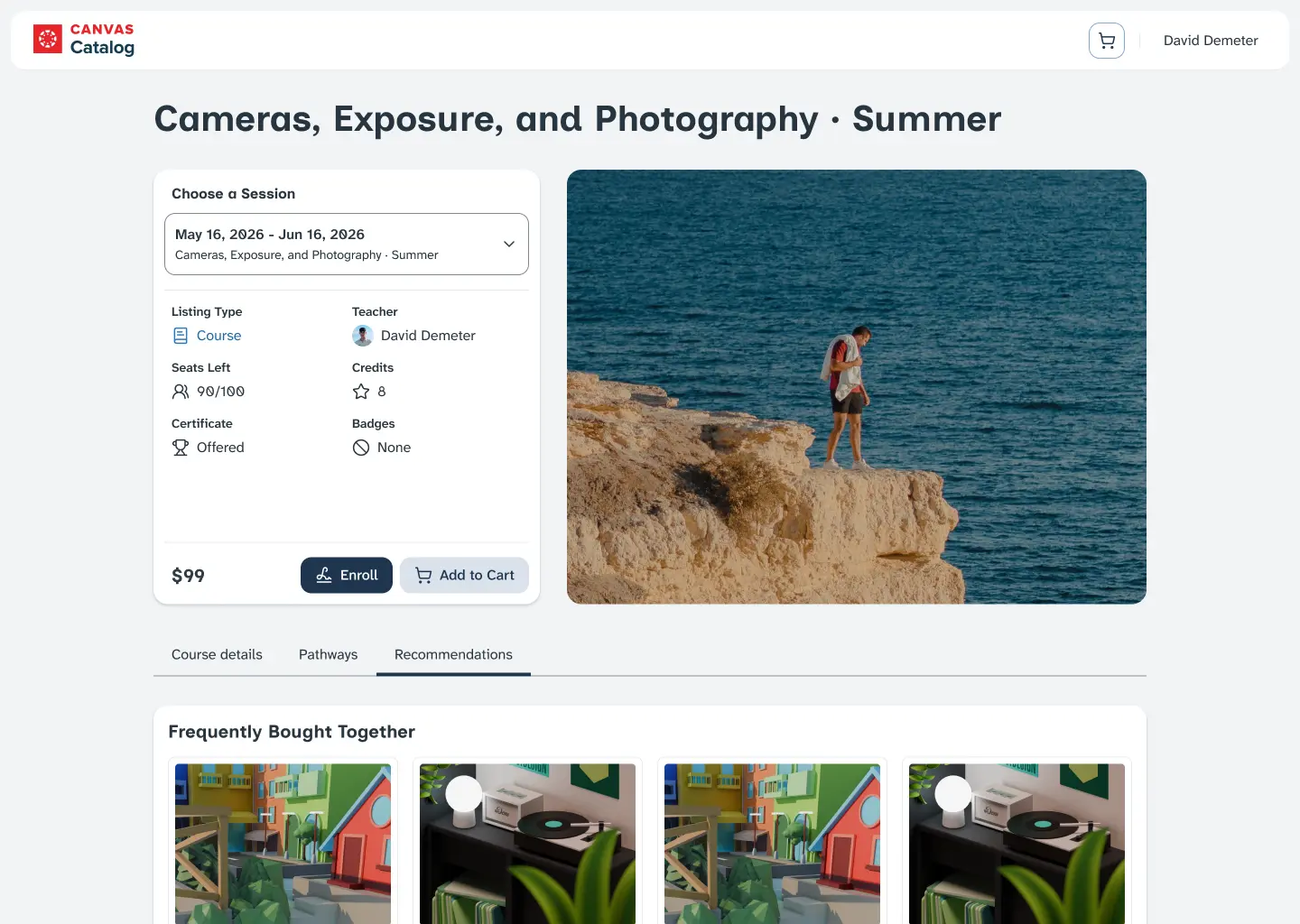
Multi-Session Listings was my main and biggest project during the internship.
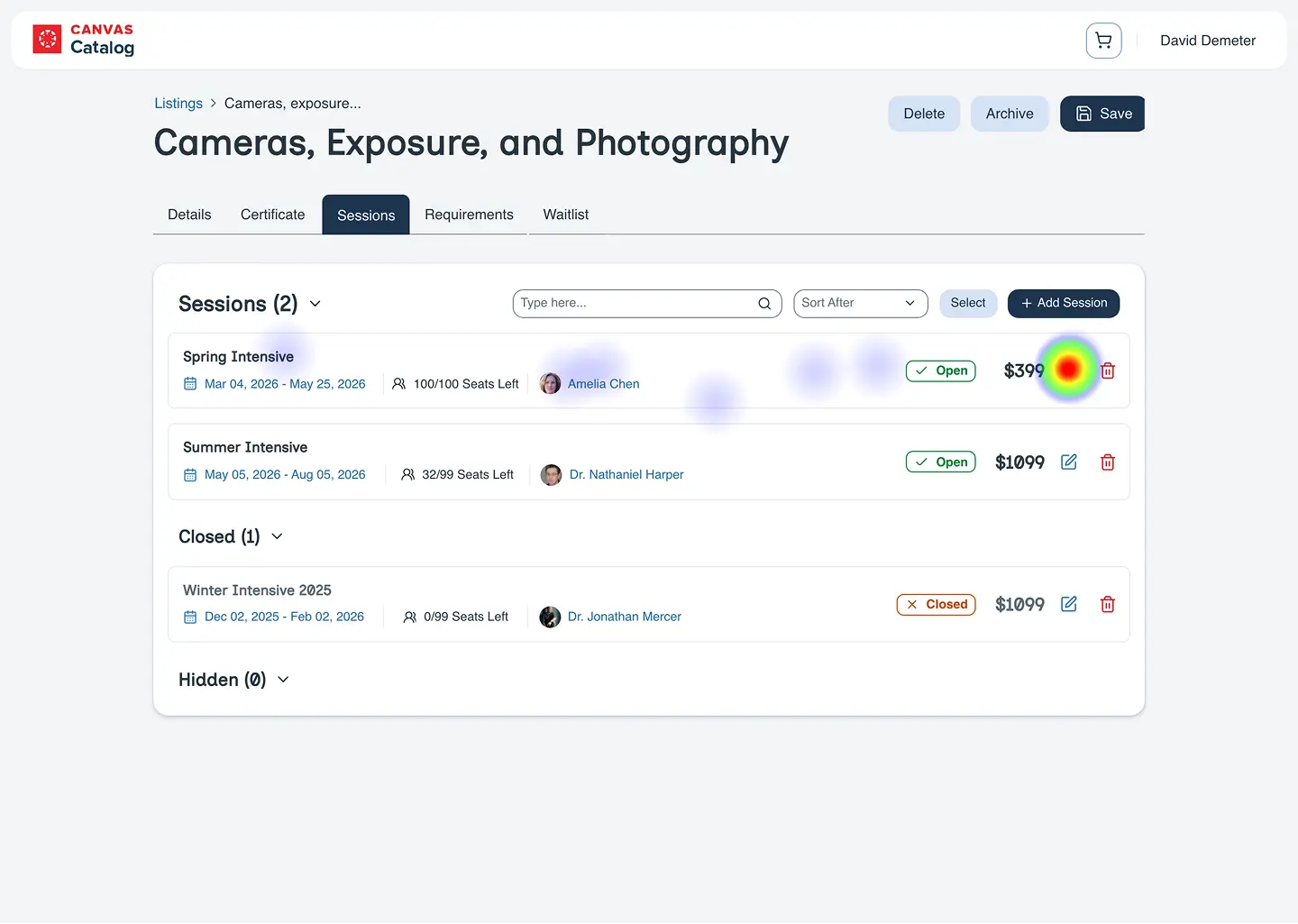
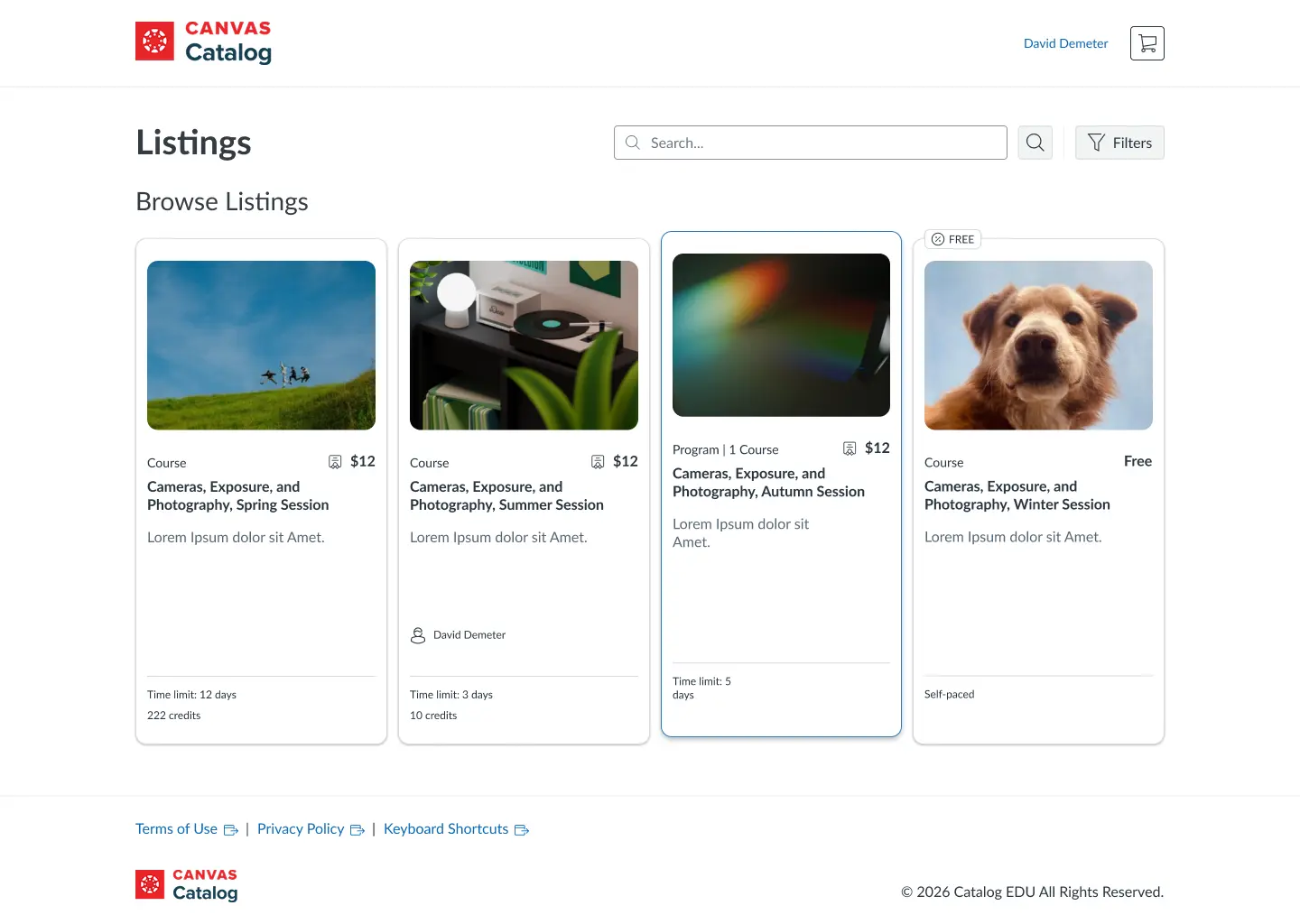
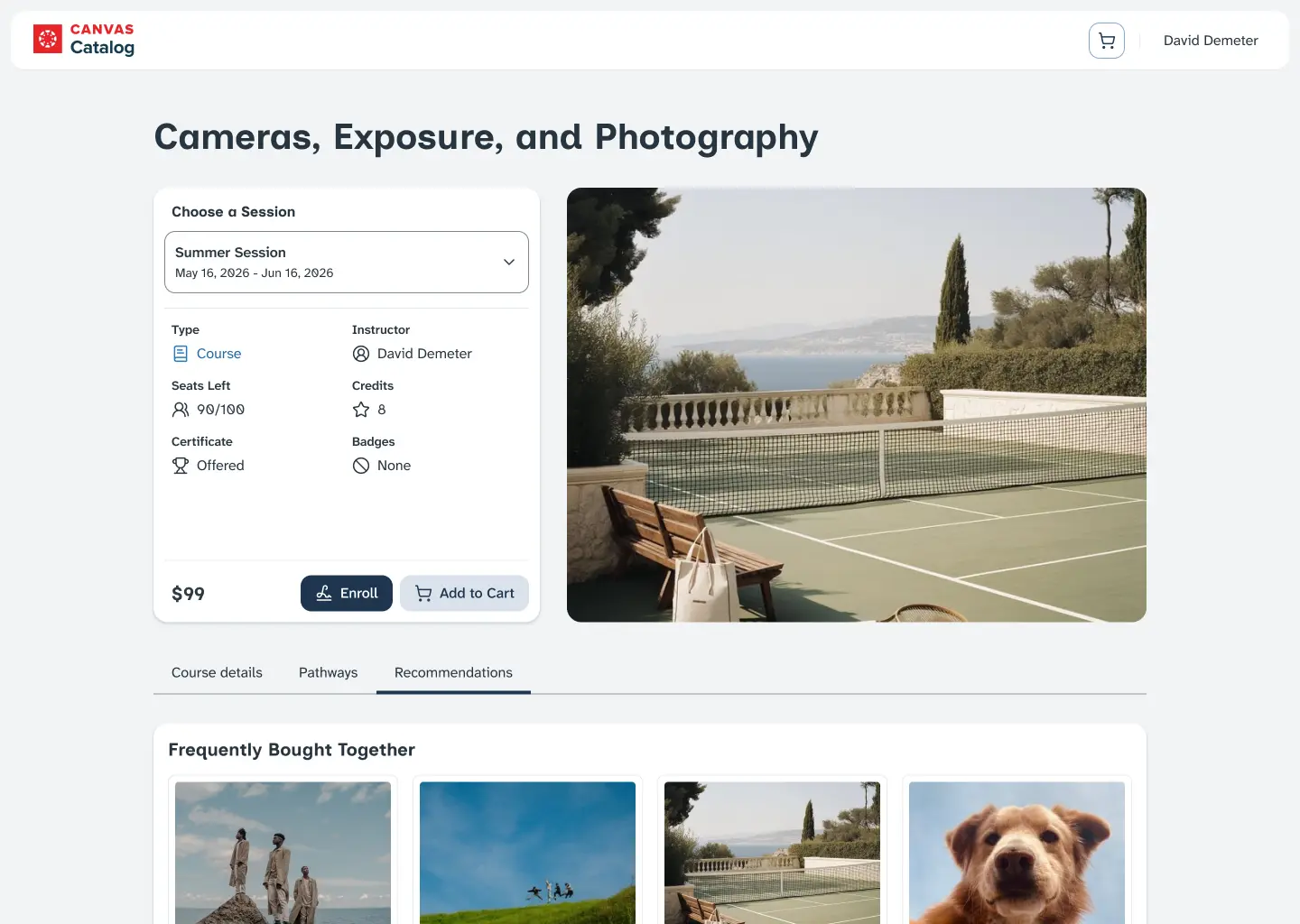
Canvas Catalog had no native way to manage courses that ran across multiple sessions. Admins had to create separate listings for each date, creating repetitive work, catalogue clutter and confusion for learners trying to understand which session belonged to which course.
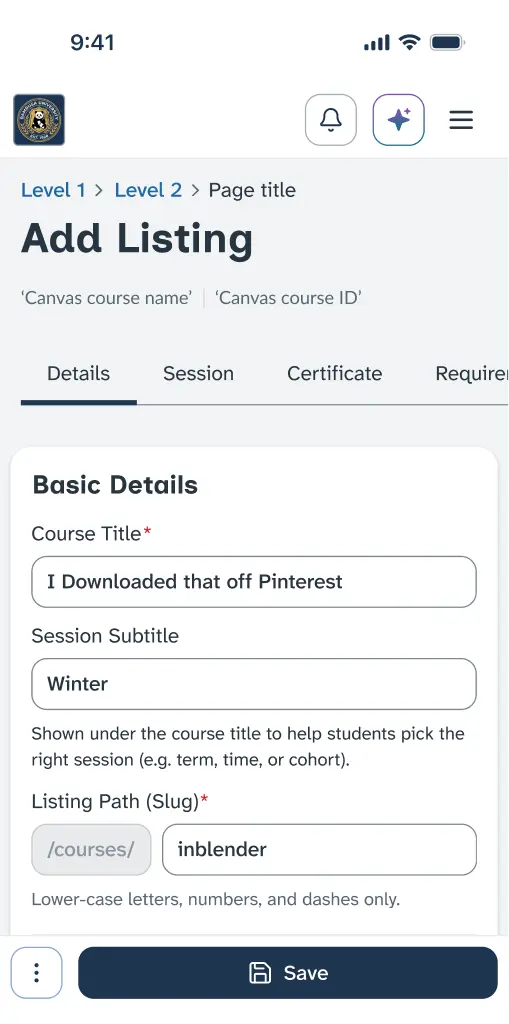
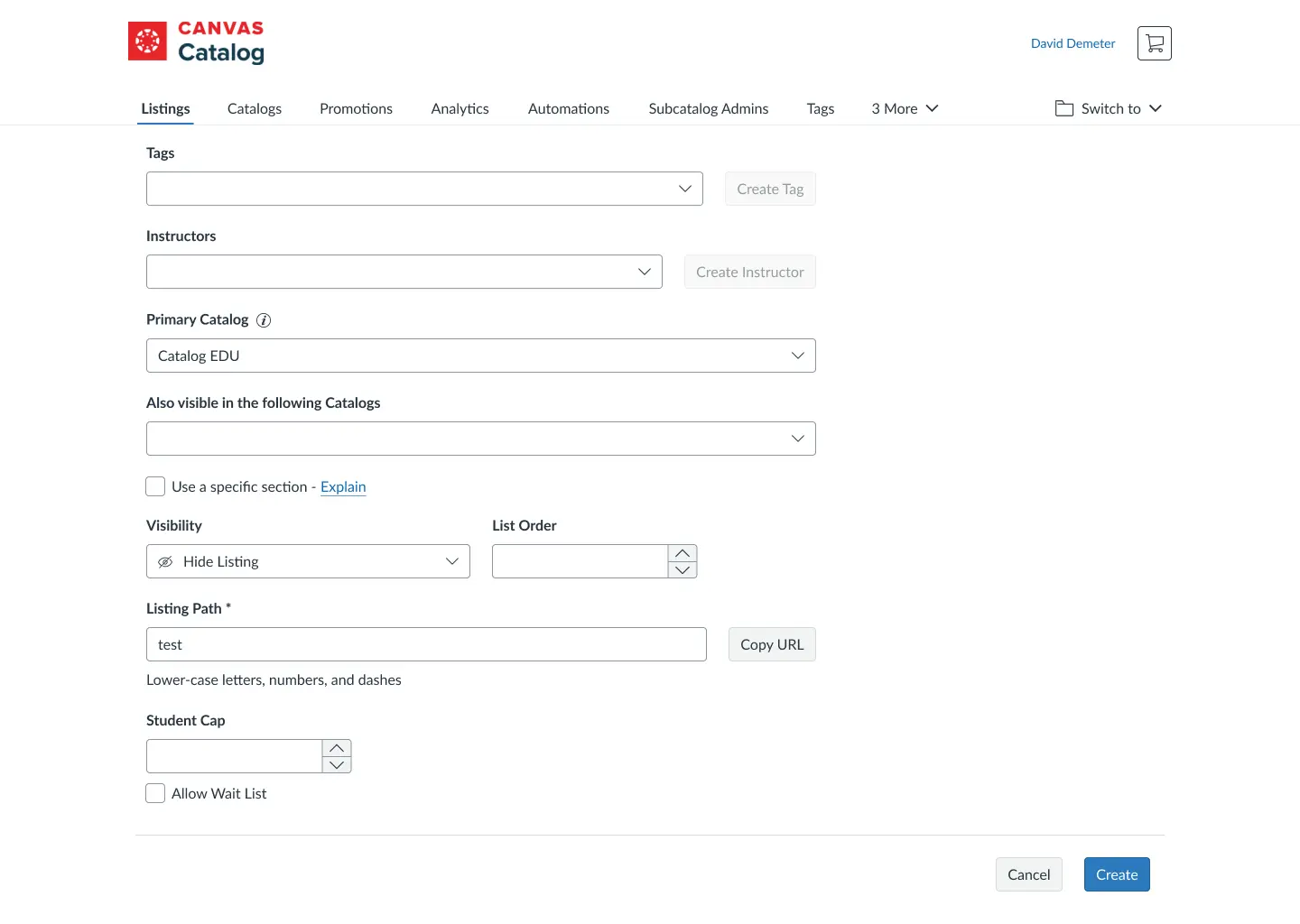
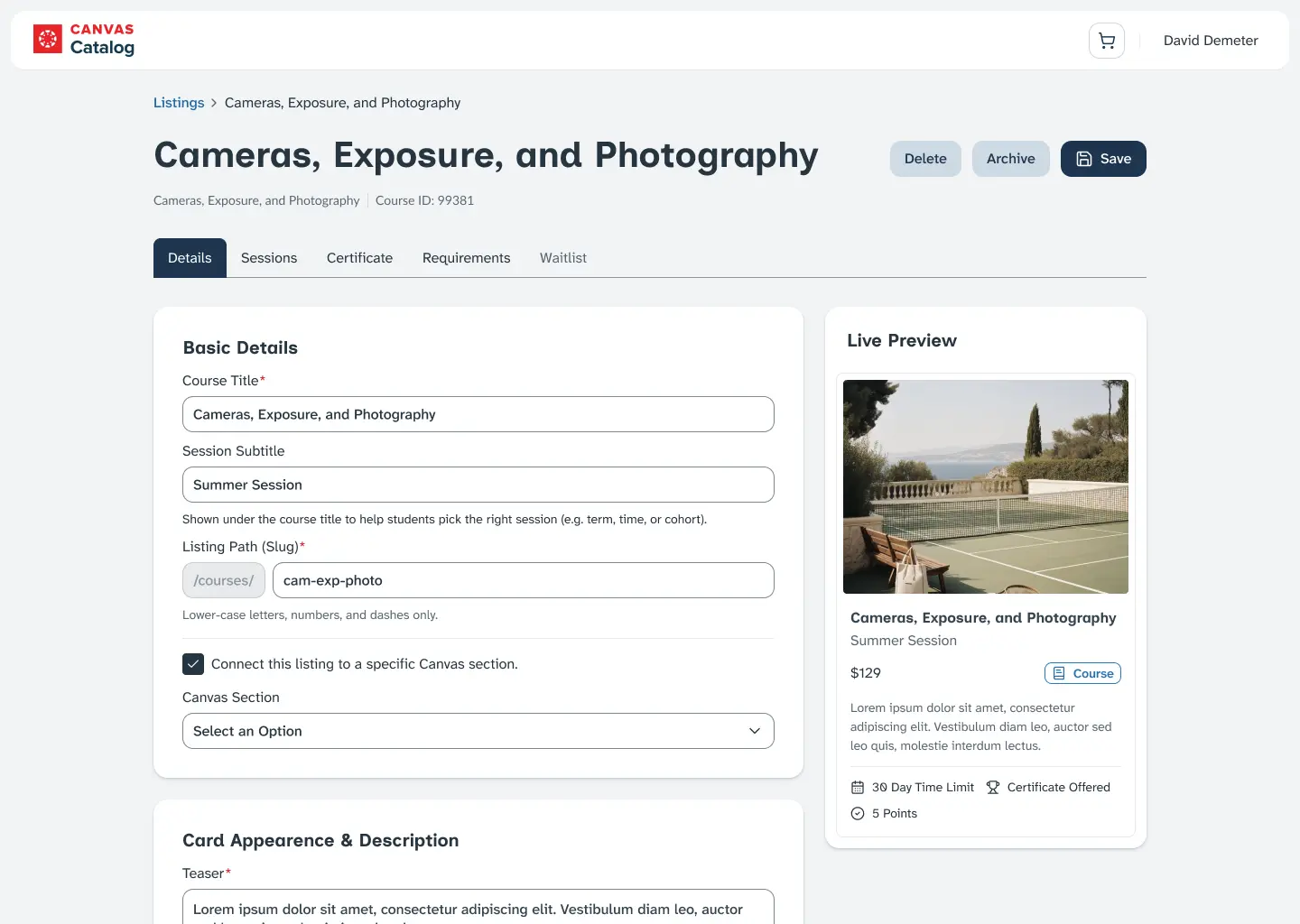
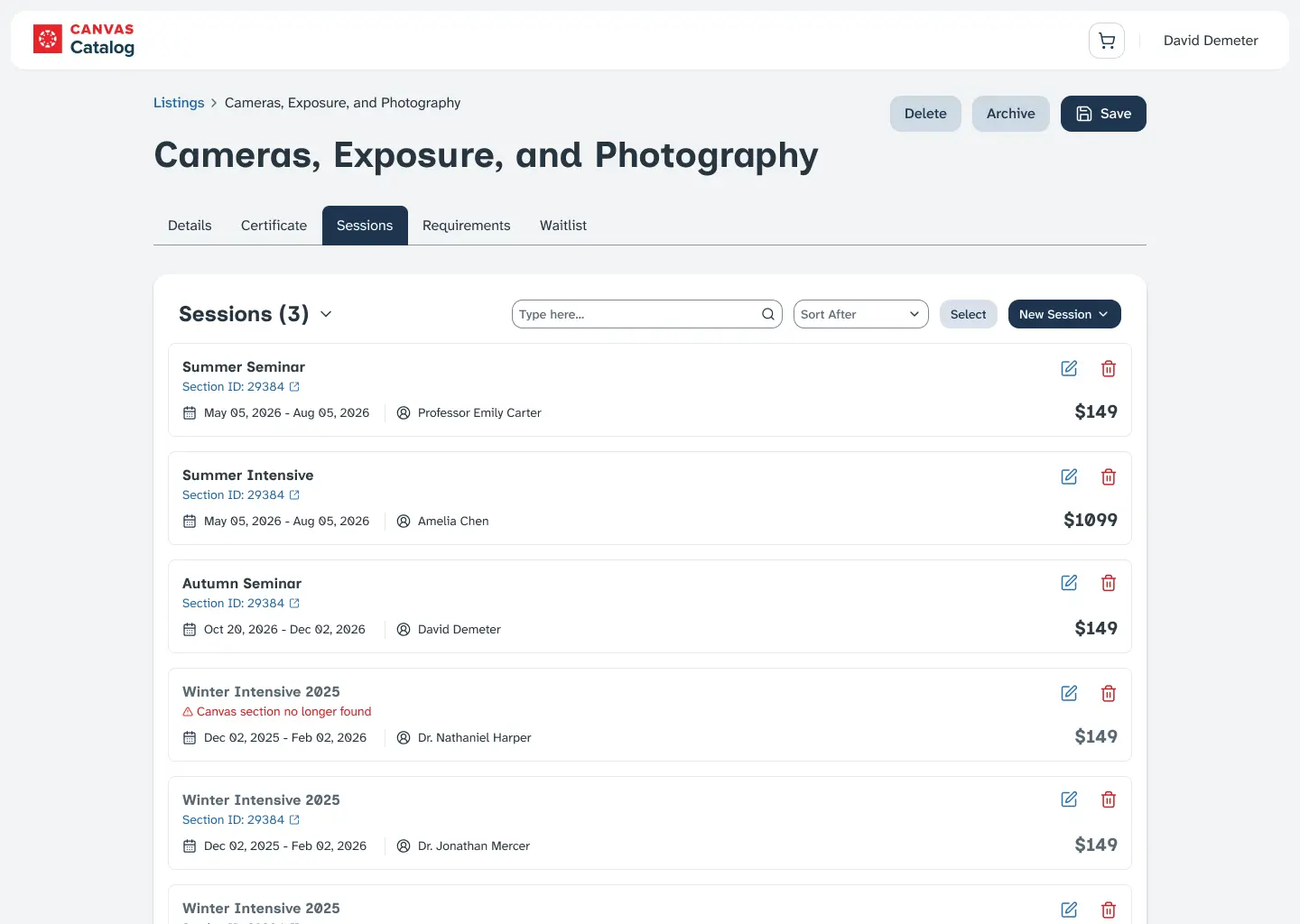
I designed the feature from the ground up, starting with research and journey mapping and continuing through prototyping, Maze testing and developer grooming. As part of the work, I also completely redesigned the course creation experience. The existing form was essentially a long sequence of unrelated options stacked one after another, making it difficult for admins to understand what belonged together or where to find specific settings. I reorganized the entire flow into clear categories and groups, creating a much more structured and scannable experience. The new approach was very well received by the team and became a major UX improvement alongside the Multi-Session work.
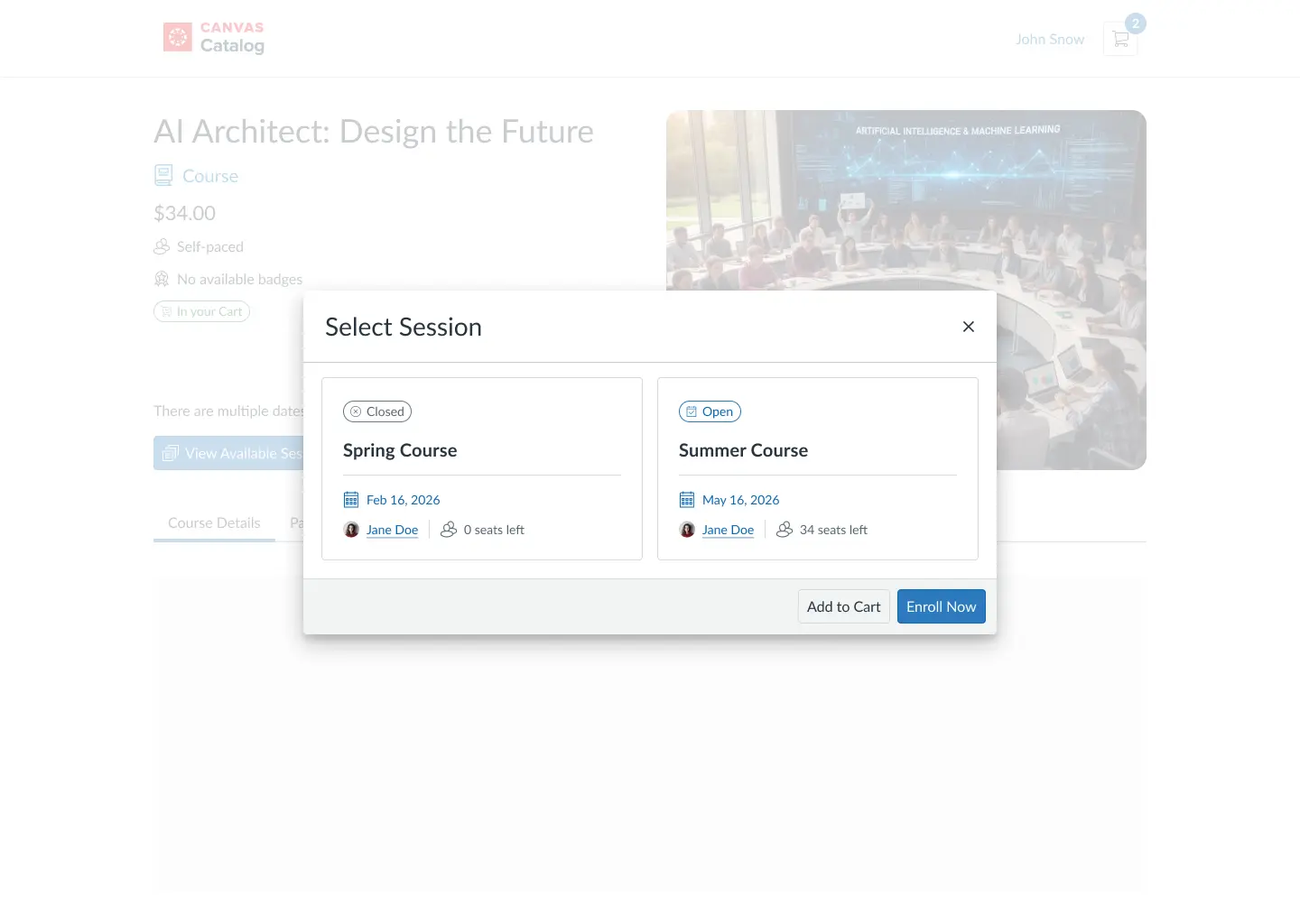
The core Multi-Session concept also evolved significantly through collaboration with engineering. The ideal solution involved a clean parent-and-child architecture, but the underlying system could not support that within the existing roadmap. I designed a set of UI patterns that could make the existing structure feel much more cohesive, including session management, expandable listing groups, duplication and synchronization flows, safer state transitions and contextual session selection.
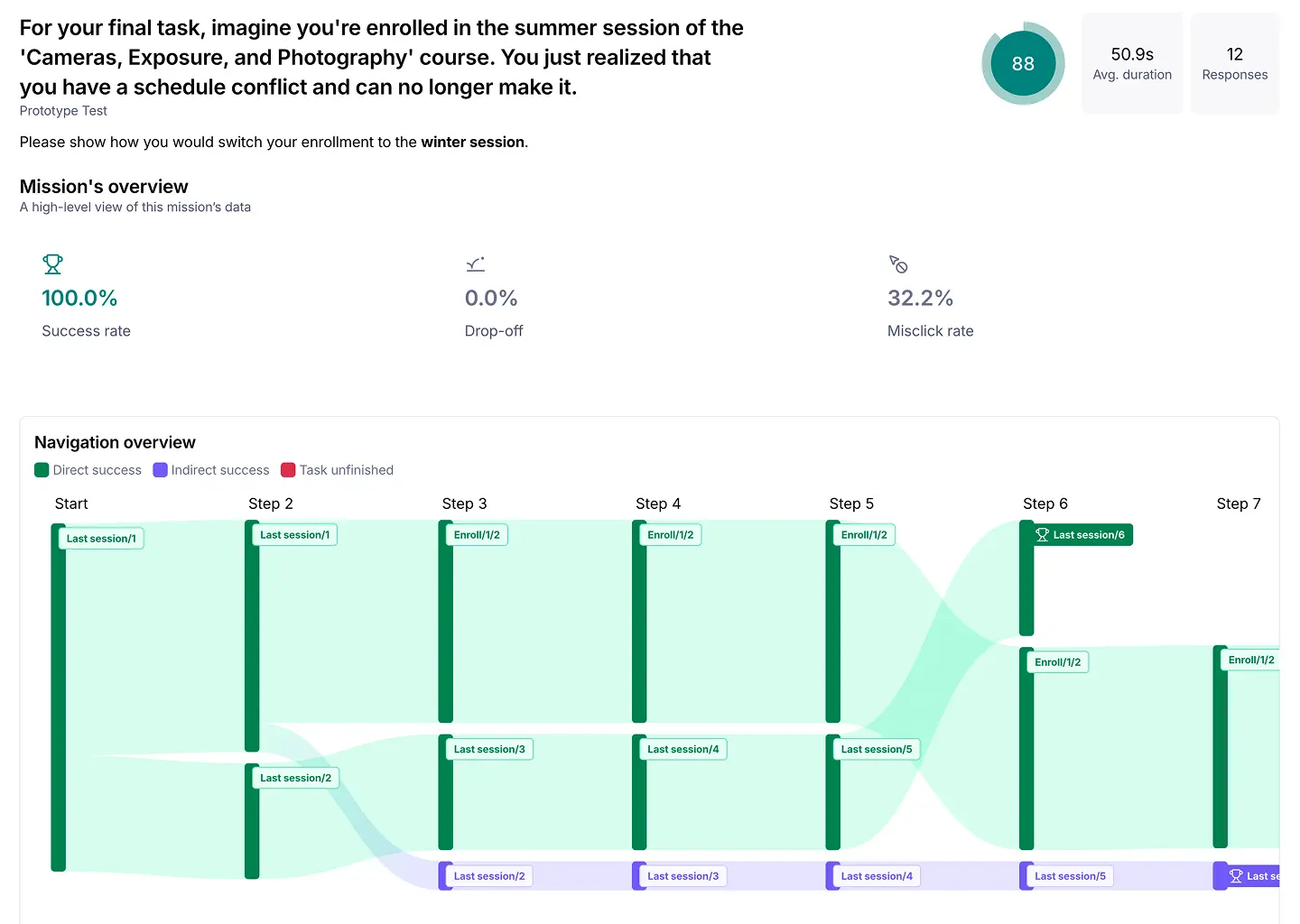
I tested the experience through Maze and iterated based on what users struggled with. For example, when testing revealed that learners were missing the session-switching action inside an overflow menu, I redesigned the interaction around a much more visible entry point while keeping destructive actions safely contained.
The project became one of the biggest examples of what I learned during the internship: taking a complex problem from research through design and testing, working directly with developers on the technical reality, and improving the surrounding experience wherever the broader workflow called for it.

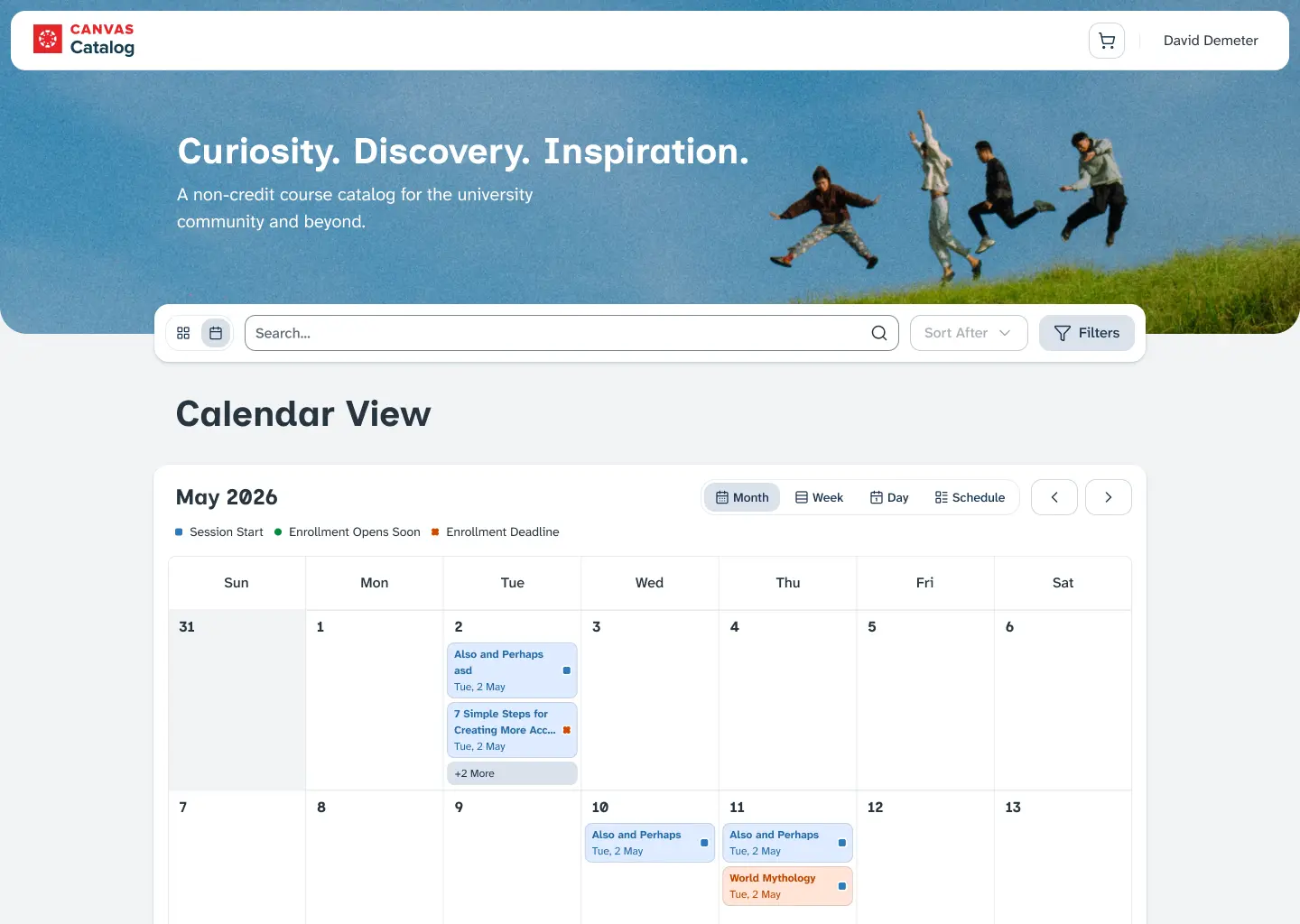
The Calendar project started with a straightforward request: help users understand when courses were starting. The obvious solution was a traditional calendar view, so I explored that direction first.
Testing the idea against real Catalog data quickly exposed a much bigger problem. An institution could have dozens of courses starting on the same day, making a traditional calendar grid increasingly difficult to use. The design needed to communicate when activity was happening without forcing the calendar itself to contain every course.
I moved toward a Calendar + Agenda model. The calendar became a visual overview of course density and timing, while the agenda handled the detailed course information. This also created a much cleaner path for mobile, where the experience could naturally become a vertically scrolling schedule.
Along the way, I also reviewed the product requirements against the existing mockups, worked through terminology and empty states, and explored multiple calendar views including monthly, weekly, daily and schedule-based experiences. The prototypes are currently being used in customer interviews, so the work is being evaluated directly with real users.
Alongside the larger projects, I worked on a wide range of smaller features and explorations across Instructure's products.
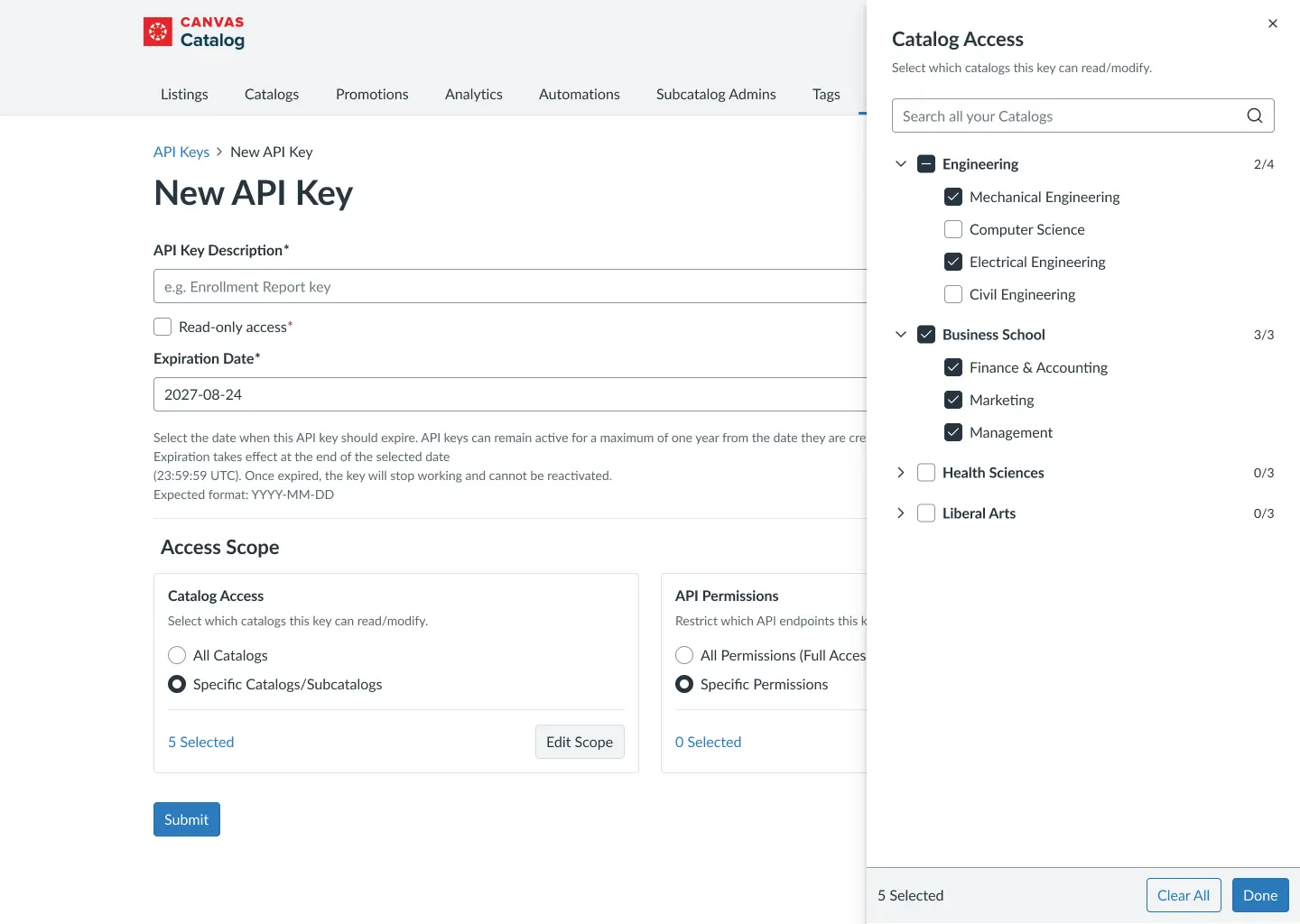
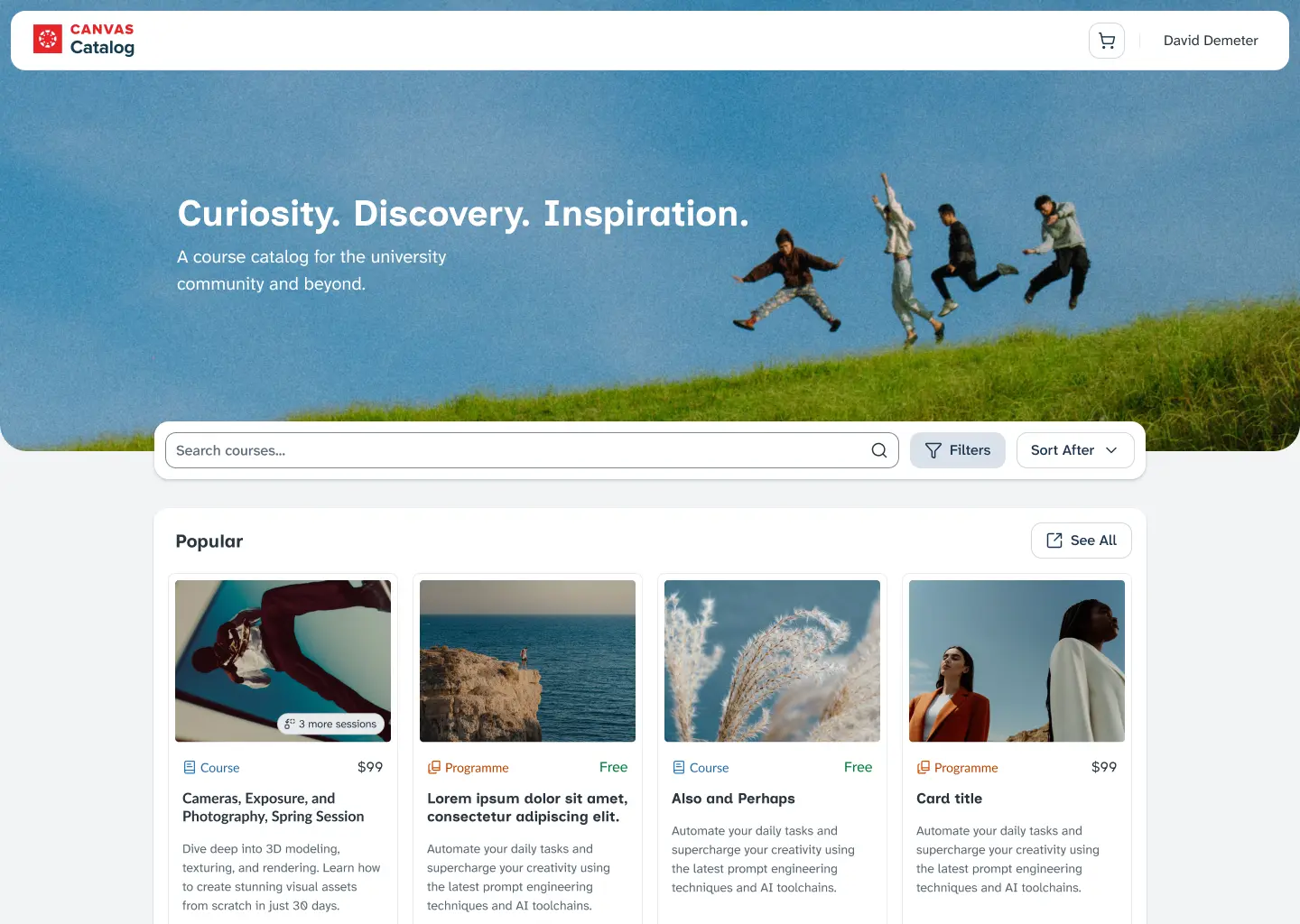
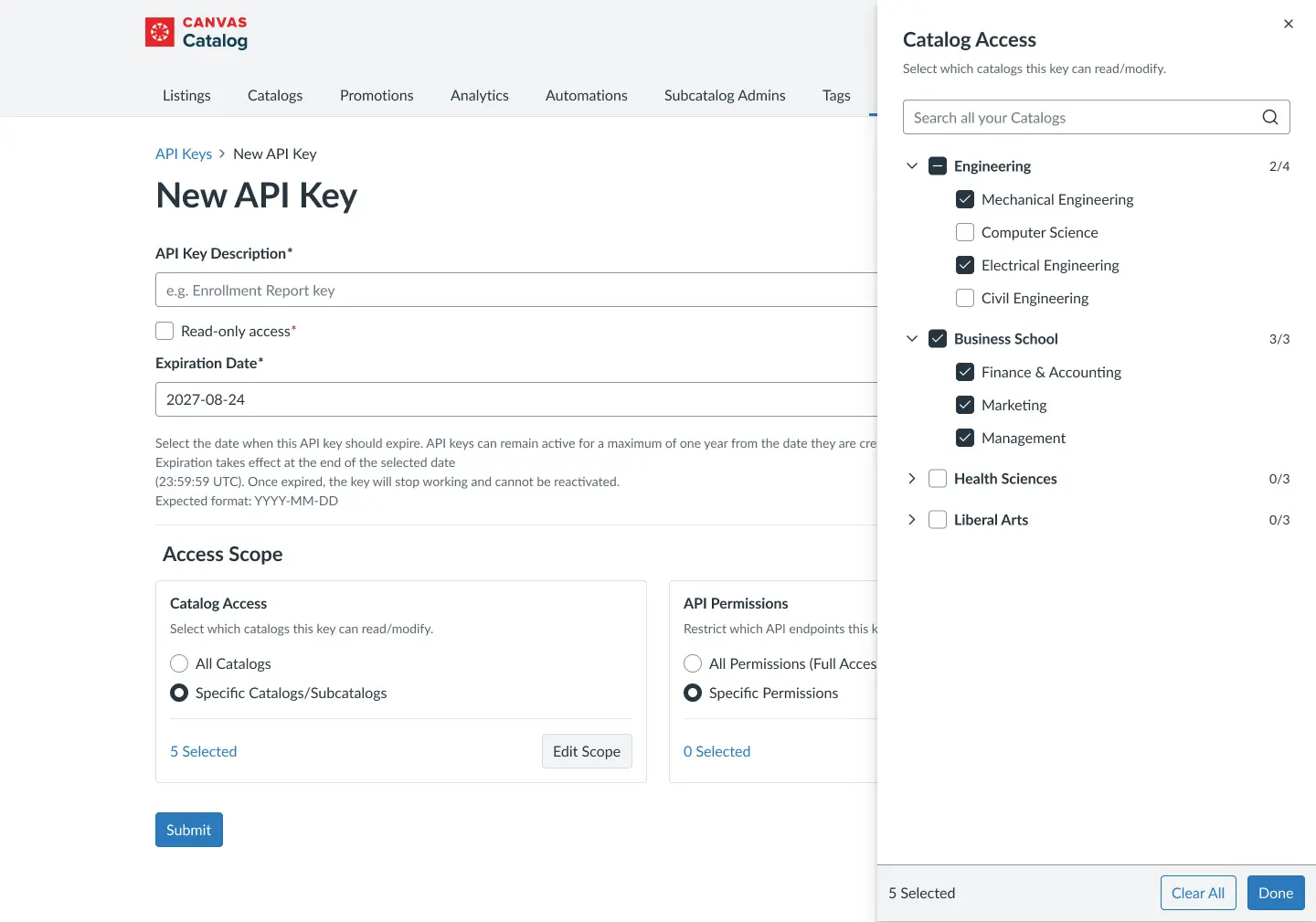
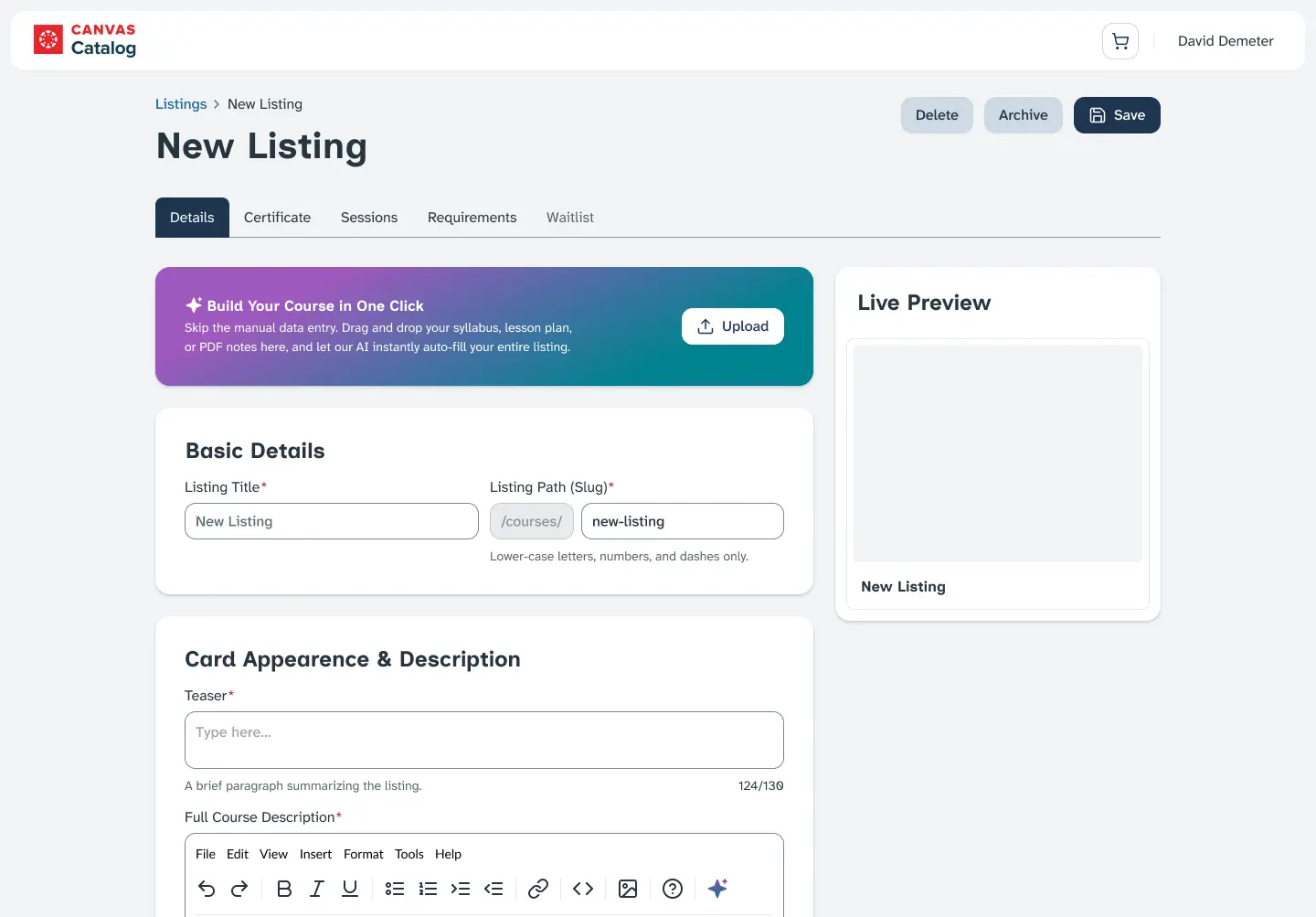
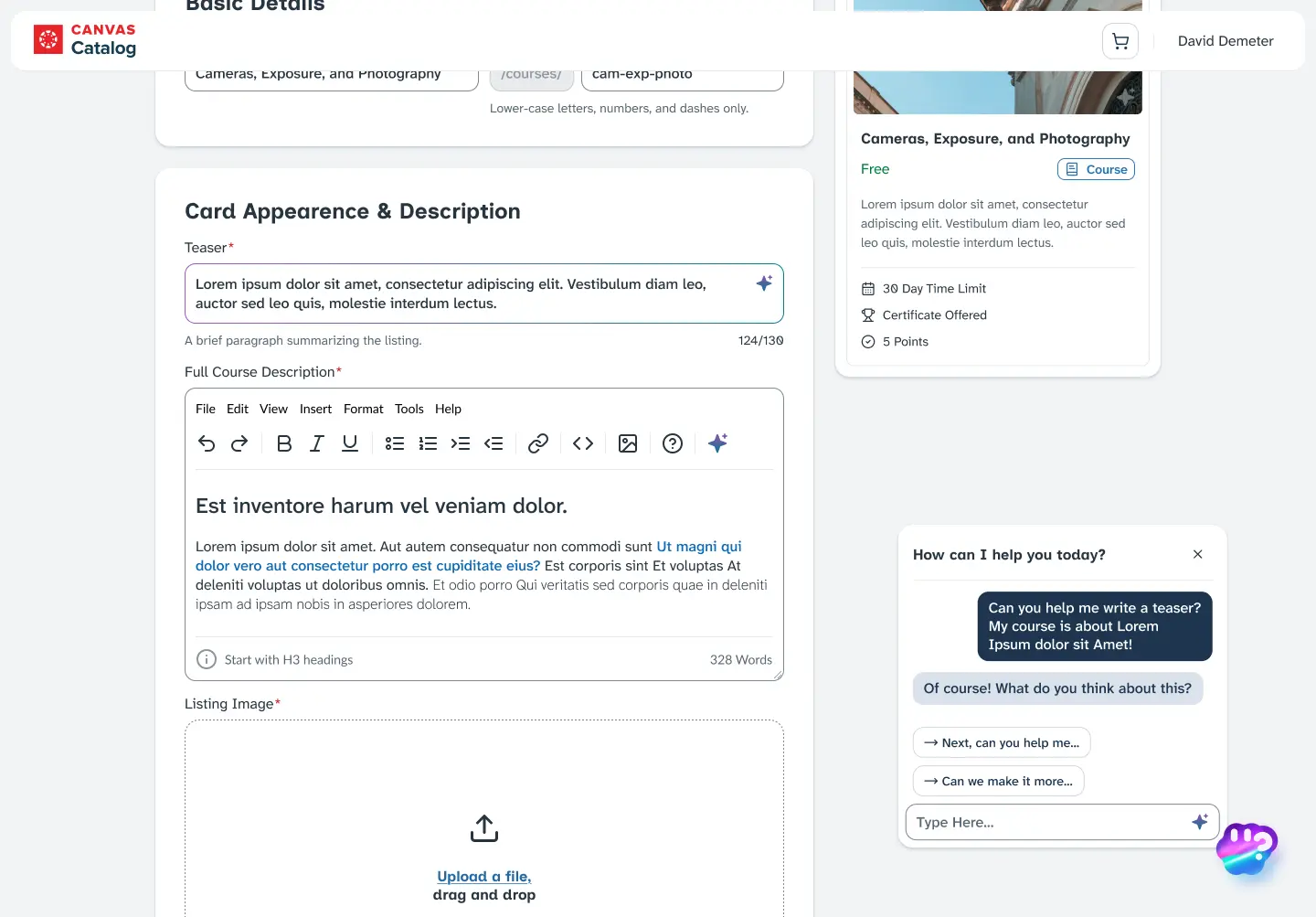
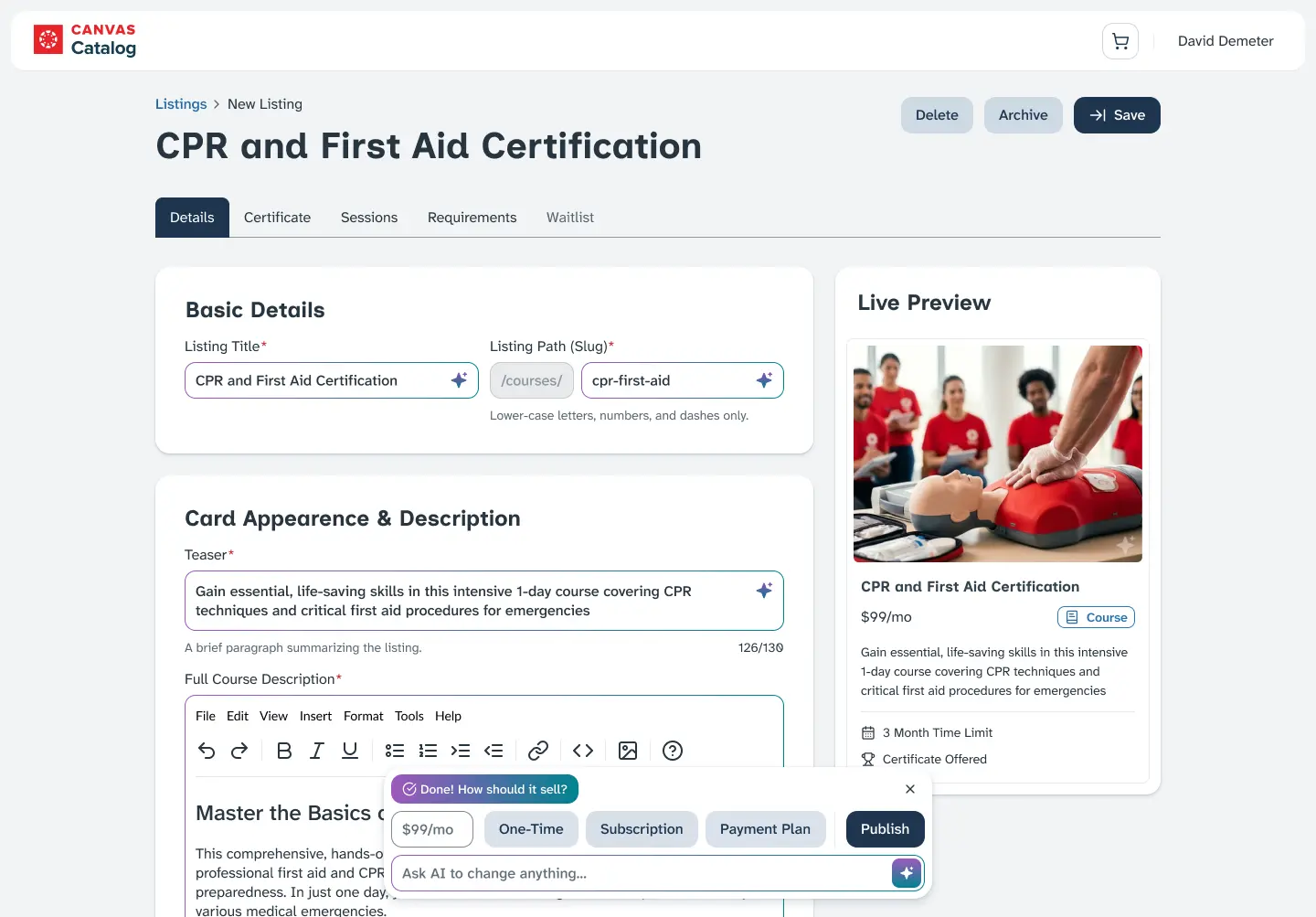
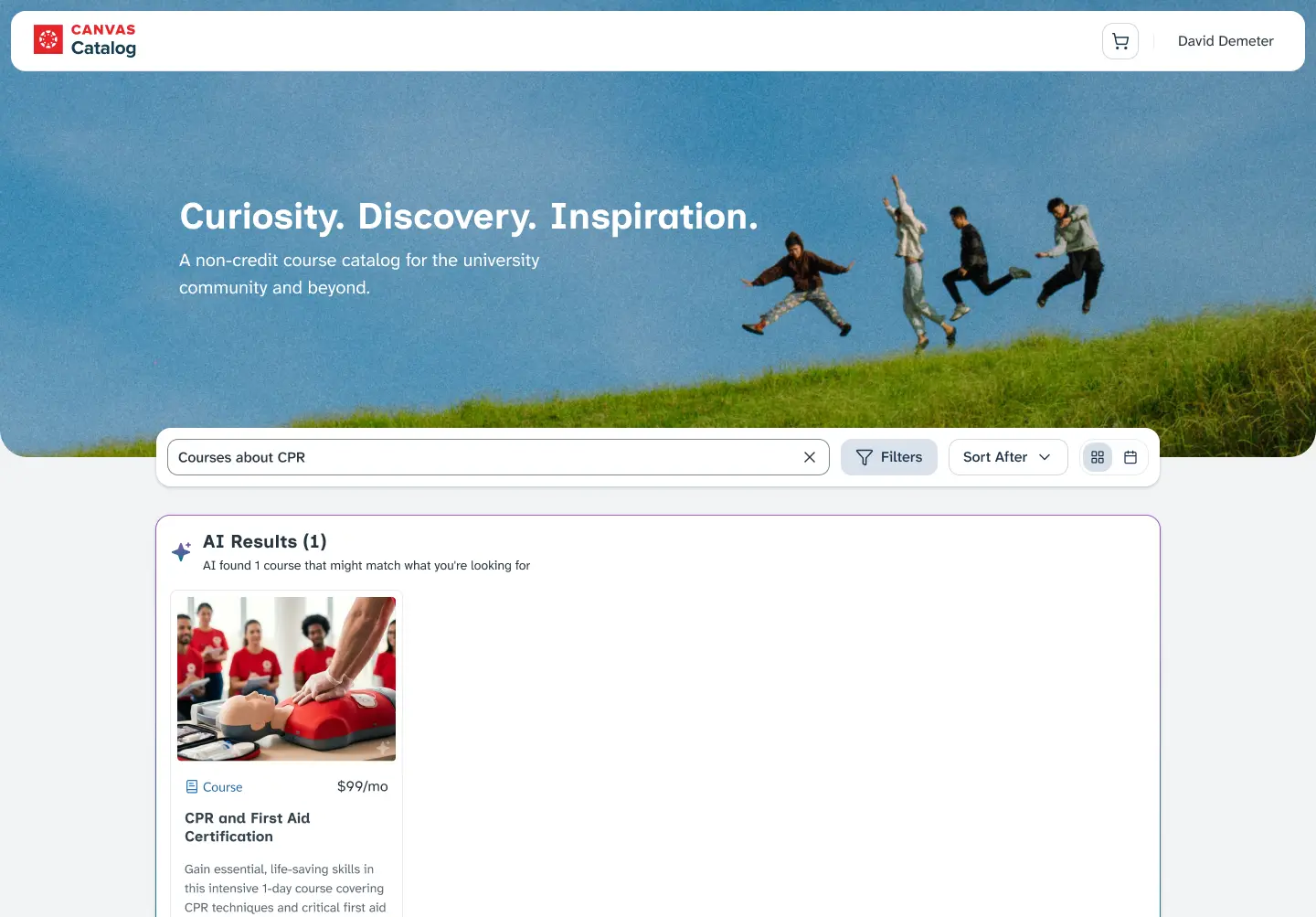
I designed API token scoping for Catalog administrators, giving them control over which catalogs a token could access and exactly what it could do. I also designed the Canvas Catalog AI Hack Night experience, creating a two-screen Admin-to-Learner prototype for InstructureCon and shaping the interaction, AI listing flow and course discovery experience.
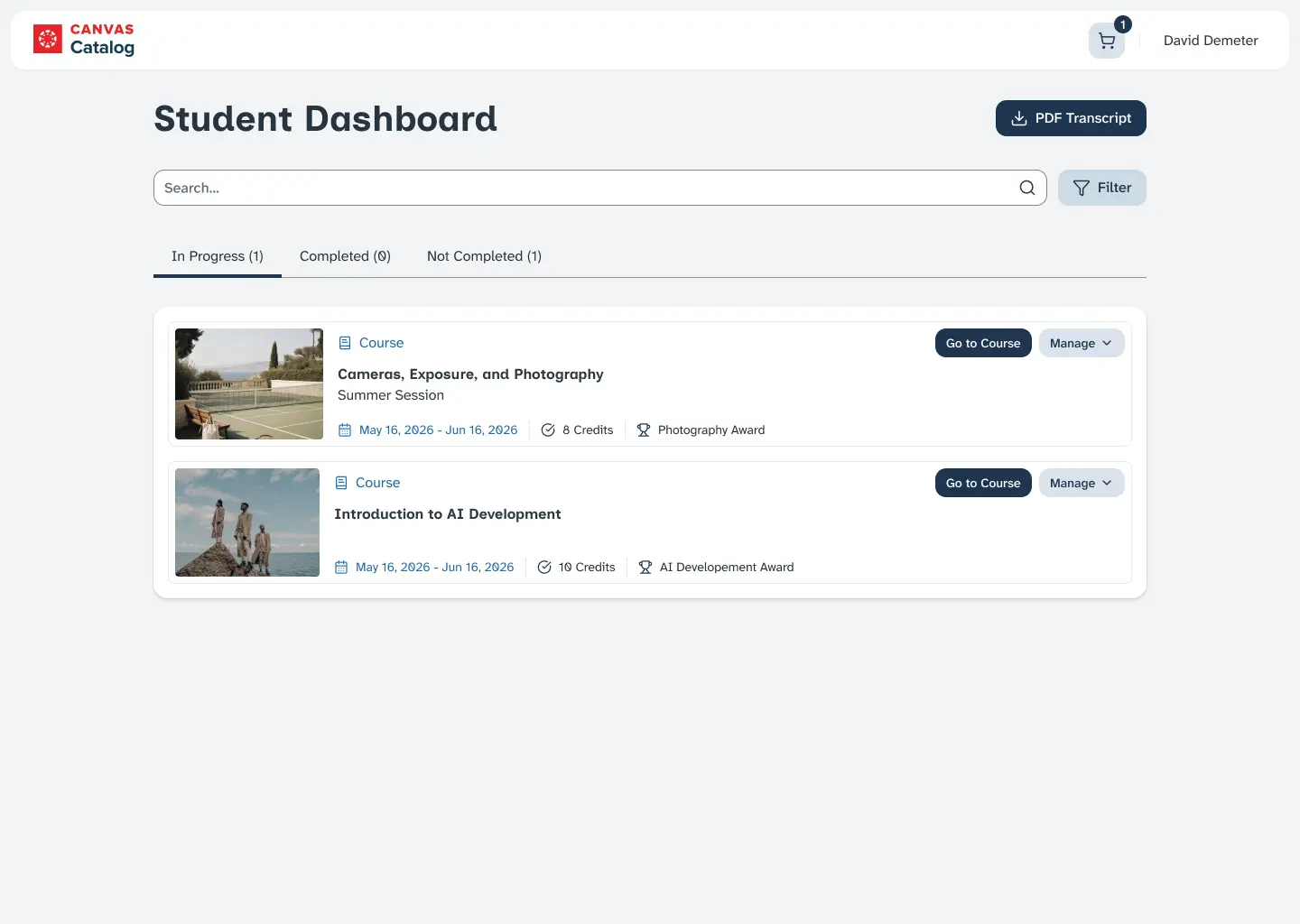
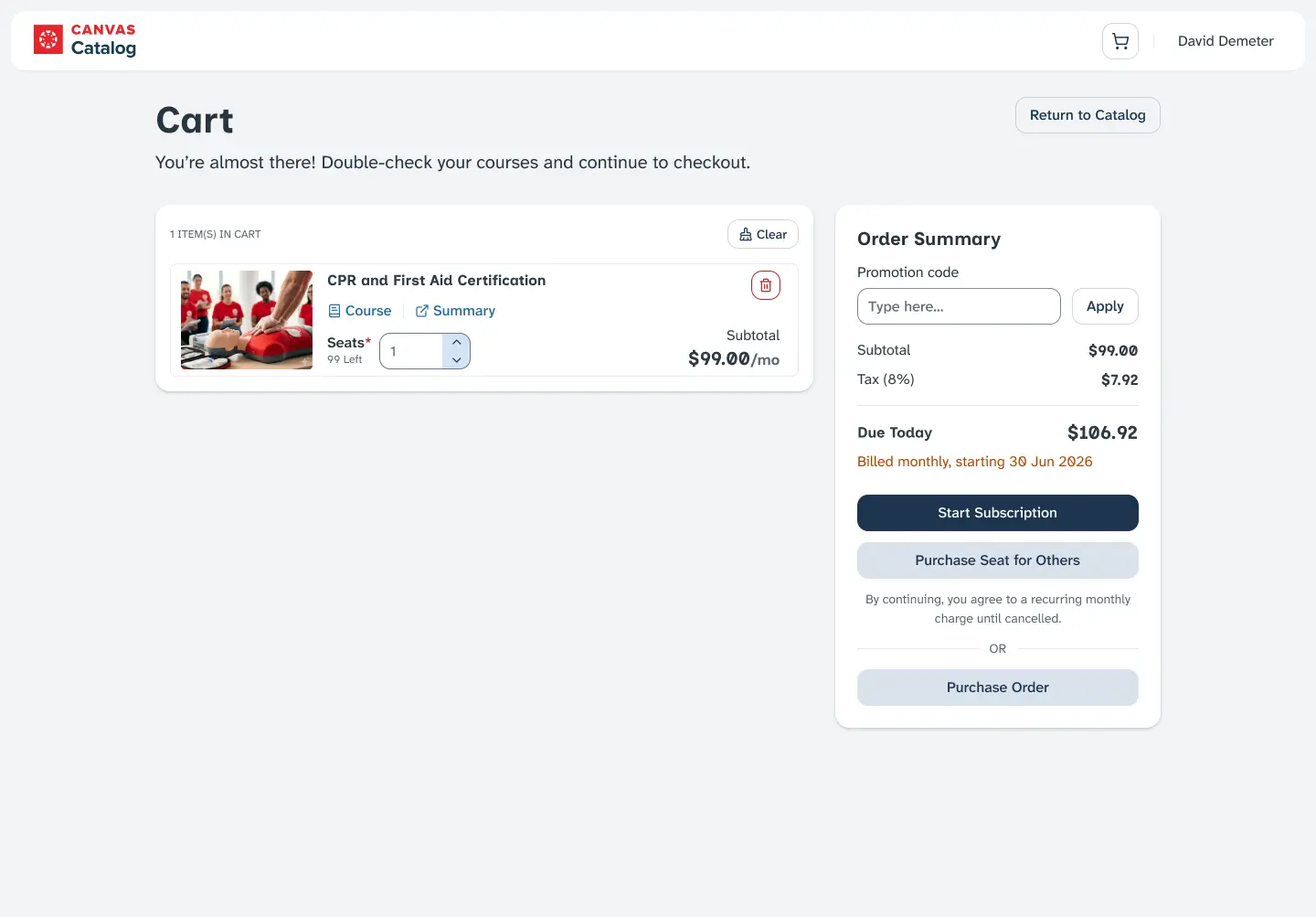
Other work included dynamic pricing and payment-plan states, Quottly's degree audit and course search experience, responsive educational dashboards, student dashboard improvements, Parchment product exploration, and the migration of older UI into newer visual patterns. I also helped adapt designs across desktop, tablet and mobile, including cases with dense data and highly variable content.
Research became a meaningful part of this work too. I created and adapted Maze studies, usability tasks, screeners, comprehension questions and AI concept tests, and later worked with real customers during the Calendar research process.
The biggest thing I took from the internship was learning to think beyond individual screens.
Real product work constantly introduced questions that weren't visible in the original design: What happens when the data gets huge? What happens when something is missing? What happens on mobile? What happens when engineering cannot support the ideal architecture? What happens when a user misunderstands a state or action?
I became much more comfortable answering those questions through research, iteration and collaboration. I learned how to work with developers early, how to defend a design decision when there is a reason behind it, and how to change direction when new information proves that another approach is stronger.
Most importantly, I learned that I can take ownership of complex product work. I joined as an intern expecting to contribute to existing work. I left having designed new features, tested them with users, worked through technical constraints, collaborated with multiple teams and seen those ideas move toward real product implementation.